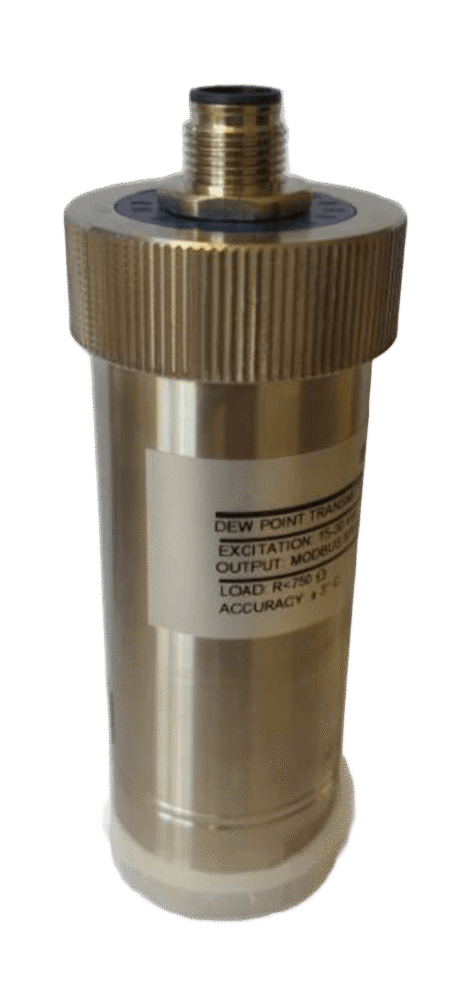
Electronsystem MD products are designed not only for traditional SF₆, but also for alternative insulating gases such as Green Gas and Dry Air.
High voltage circuit breakers commonly used for distribution and transmission are reliable if they are able to operate in steady and controlled conditions. The use of SF6 as quenching gas is extremely important to guarantee safe operation throughout the life of the equipment. However, if the moisture inside the gas exceeds critical limits, the insulating properties of SF6 are no longer maintained and severe damage can occur to the switchgear.
Moisture limits are defined by the IEC60480 standard, which provides guidelines for checking and treating sulfur hexafluoride (SF6) taken from electrical equipment and specifies requirements for its reuse. The ingress of moisture into the tank can lead, during power switching and arc quenching, to the chemical decomposition of SF6 into fluorides.
Fluorides do not reduce the insulating properties of SF6 unless the humidity content exceeds a critical threshold. At that stage, the by-products also include highly corrosive hydrofluoric acid (HF). In addition, moisture content must be kept under control to ensure that, in very cold climates, water vapor does not condense and create tracking paths or leakage currents.
Moisture calculation is based on the measurement of two physical parameters: relative humidity (RH%) and temperature. Our sensor features an integrated sensing element capable of simultaneously measuring both RH and temperature, which are then converted by the ASIC into the equivalent dew point temperature.